Material Innovation Drives Next-Generation Mobility Aid Design

The mobility aid industry is undergoing a quiet revolution in materials science. Where standard steel tubing once defined the category, today’s leading walkers, rollators, and canes increasingly rely on advanced composites and aerospace-grade alloys — a shift that directly impacts product weight, durability, and end-user satisfaction. For B2B buyers, understanding these material trends is essential for curating product lines that meet evolving institutional and consumer expectations. Carbon fiber has emerged as the benchmark for premium lightweight mobility aids. Weighing up to 60% less than traditional steel frames, carbon fiber rollators and canes reduce user fatigue and improve portability without sacrificing structural integrity. JiNDA Health Care’s carbon fiber cane series, for example, delivers load capacities exceeding 120 kg at a fraction of conventional weight — a combination that resonates with both elderly users and rehabilitation professionals managing post-surgical recovery protocols. Aircraft-grade aluminum (6061 and 7000 series) remains the workhorse for mid-range and high-volume products. Recent advances in hydroforming and butting techniques allow manufacturers to achieve thinner wall profiles while maintaining the strength-to-weight ratios that distributors require for cost-effective, durable inventory. Aluminum also offers superior corrosion resistance — a critical factor for shower chairs and commodes used in humid bathroom environments. For procurement decision-makers, the material question is ultimately a margin and positioning question. Carbon fiber commands a premium but opens doors in high-end retail and boutique healthcare channels; aluminum balances performance and price for volume-driven institutional contracts. JiNDA’s dual-material manufacturing capability ensures that partners can source both tiers from a single, ISO 13485-certified supplier — simplifying quality assurance and consolidating logistics across their entire mobility aid portfolio.

JiNDA Deepens OEM Customization for Global Mobility Partners

As demand for differentiated mobility aids accelerates across North America and Europe, OEM and ODM partnerships have become the cornerstone of competitive advantage for distributors and healthcare suppliers. JiNDA Health Care, with 18 years of manufacturing expertise and ISO 13485 certification, is expanding its OEM customization program to give global partners greater design flexibility, faster prototyping cycles, and tighter brand integration. The enhanced program now covers full-spectrum customization: from frame geometry and weight-bearing specifications (supporting up to 300 kg for bariatric models) to surface finishes, packaging design, and private-label compliance documentation. Partners can specify carbon fiber or aircraft-grade aluminum constructions, choose from a palette of powder-coat colors, and request region-specific labeling that meets FDA, CE, and MDR requirements. Speed to market is equally critical. JiNDA has streamlined its prototyping workflow to deliver initial sample runs within 15 business days, backed by in-house tooling and a vertically integrated supply chain that eliminates third-party bottlenecks. This agility allows distributors to respond to seasonal demand shifts and institutional tender requirements without the long lead times typical of traditional OEM arrangements. For procurement teams evaluating OEM partners, the differentiator is no longer just unit price — it is the total cost of ownership across design iteration, compliance, and fulfillment. JiNDA’s expanded OEM program directly addresses these priorities, offering a manufacturing partner that scales with your brand strategy while maintaining the quality consistency that long-term care facilities and wholesalers demand.

Nursing Home Capital Budgets Shift Toward Mobility Aid Upgrades in North America

North American nursing home operators are reallocating capital budgets toward mobility aid equipment upgrades, driven by three converging pressures: rising resident acuity levels, stricter fall-prevention mandates, and the growing preference for aging-in-place models that demand institutional-grade equipment in home settings. For distributors and manufacturers, this budget shift represents a sustained demand signal that extends well beyond replacement cycles. The acuity trend is the primary driver. Residents entering skilled nursing facilities today have higher mobility impairment rates than a decade ago, partly because hospitals are discharging patients earlier under value-based care models. These residents require heavier-duty equipment — bariatric commode chairs, reinforced walkers, and rollators with higher weight capacities — that many facilities were not originally equipped to provide. Industry data indicates that the average weight-capacity requirement for commode chairs in U.S. nursing homes has risen from 120 kg to 180 kg over the past five years, with bariatric units now specifying 250 kg or higher. Fall-prevention regulations are the second force. CMS (Centers for Medicare & Medicaid Services) survey protocols now evaluate mobility equipment adequacy as part of deficiency surveys, and facilities cited for inadequate assistive devices face plan-of-correction requirements that carry both financial and reputational costs. This regulatory pressure has made mobility aid procurement a compliance-driven budget line rather than a discretionary one — and compliance buyers are less price-sensitive than typical procurement officers, prioritizing certification (ISO 13485, FDA registration) and product reliability over unit cost. For B2B suppliers, the practical takeaway is that nursing home and long-term care procurement is increasingly specification-driven. Catalogs that clearly list weight capacities, certification status, and regulatory compliance — rather than lifestyle imagery — align with how these buyers evaluate products. JiNDA Health Careu2019s product range, spanning 120 kg to 350 kg weight capacities with ISO 13485 certification and US warehouse availability, is structured to match this procurement reality. Distributors targeting the institutional market should lead with specs and compliance, not style.

JiNDA Introduces Foldable Shower Chair with Reversible Backrest for Versatile Care

JiNDA Health Care has released a foldable shower chair with a reversible backrest, designed for distributors and care facilities that need a single product to serve both shower and commode use cases. The backrest flips 180 degrees, converting the chair from a shower seat with rear support to a commode-style chair with front-access opening — eliminating the need for facilities to stock two separate products for adjacent bathrooms. The frame is constructed from 1.2 mm aluminum alloy tubing with a white powder-coated finish, supporting a rated load of 150 kg. The seat features a drainage pattern for shower use and a removable commode bucket insert that latches securely in place. Anti-slip rubber feet with a wide stance provide stability on wet surfaces, and the fold-flat mechanism allows compact storage when not in use — a practical advantage for facilities managing shared equipment across rooms. Armrests are removable for lateral patient transfer, reducing caregiver strain during assisted bathing. For B2B buyers, the commercial advantage of a reversible-backrest design is inventory efficiency. Nursing homes and home-care distributors typically purchase separate shower chairs and commode chairs, doubling SKUs and vendor management overhead. A single dual-function unit simplifies procurement, reduces storage footprint, and offers end-users a more flexible product. Distributors who position this as a 2-in-1 solution can command a retail premium of 15–20% over standard shower chairs while still undercutting the combined cost of two separate items. The foldable shower chair with reversible backrest is available for OEM branding with custom color and packaging. MOQ starts at 200 units per SKU for OEM and 100 units for wholesale. Samples can be shipped from JiNDAu2019s US warehouse within 5 business days. Contact the sales team for specification sheets and volume pricing.

JiNDA Strengthens US Warehouse Operations for Faster Fulfillment

JiNDA Health Care has expanded the operational capacity of its US warehouse facility, strengthening a logistics backbone that now supports same-week fulfillment for wholesale and institutional orders across North America. The enhancement reflects a strategic commitment to reducing lead times for distributors, nursing home chains, and DME providers who require reliable, in-country inventory. The upgraded warehouse operation increases available SKU coverage for JiNDA core product lines—walkers, rollators, crutches, and bathing safety chairs—ensuring that high-demand configurations are available for immediate dispatch. This expansion directly addresses a persistent pain point voiced by B2B buyers: the uncertainty of overseas shipping timelines and the operational disruption caused by stockouts during replenishment cycles. Beyond inventory depth, the facility improvements include streamlined pick-and-pack workflows and integration with major domestic carriers, enabling ground delivery within two to five business days for most continental US destinations. For procurement teams managing quarterly budget windows, this level of predictability transforms purchasing from a logistical challenge into a routine operational process. The US warehouse also serves as a quality checkpoint prior to final delivery, with inbound inspection protocols ensuring that every unit meets ISO 13485-certified standards before it reaches the buyer. This dual function—logistics hub and compliance gate—reinforces the value proposition that has driven JiNDA partnerships with healthcare distributors across 30 countries. As regional warehousing becomes a baseline expectation in mobility aid sourcing, JiNDA continues to invest in the infrastructure that turns that expectation into a competitive advantage.

Why Regional Warehousing Is Now a B2B Mobility Aid Deal-Breaker

For distributors and healthcare procurement teams, the calculus of sourcing mobility aids has shifted. Price and product quality remain essential, but a new factor has risen to the top of the decision matrix: regional warehousing. Buyers are no longer willing to accept 45-day ocean freight lead times when competitors offer local-stock fulfillment within days. The economics tell the story clearly. A rollator or commode chair sitting on a US warehouse shelf eliminates customs delays, reduces demurrage risk, and cuts landed-cost uncertainty. For nursing home chains managing monthly intake cycles, the difference between a 5-day domestic shipment and a 40-day international one translates directly into occupied beds and revenue. Distribution partners who cannot guarantee near-term delivery increasingly find themselves removed from shortlists. DDP (Delivered Duty Paid) logistics further tip the scales. By absorbing customs clearance, import duties, and last-mile delivery into a single quoted price, DDP arrangements eliminate the hidden surcharges that erode margin for wholesale buyers. Industry data indicates that DDP-inclusive sourcing reduces total procurement variance by 15 to 25 percent compared with traditional FOB or CIF terms, a meaningful figure for organizations purchasing in container volumes. Manufacturers with established overseas warehouse infrastructure hold a decisive advantage in this environment. JiNDA Health Care operates a US-based warehouse that enables domestic-ground delivery for core product lines, including walkers, rollators, and bathing safety chairs. For B2B buyers evaluating supply chain resilience, the presence of in-country inventory has moved from a convenience to a prerequisite—and partners who offer it are winning the contracts.

Digital Procurement Platforms Reshape B2B Mobility Aid Sourcing

Global mobility aids market trends and data visualization

The traditional model of B2B medical device sourcing—trade shows, printed catalogs, and weeks of back-and-forth emails—is undergoing a structural shift. Digital procurement platforms now allow healthcare distributors and group purchasing organizations to compare suppliers, verify certifications, and initiate RFQs within hours rather than weeks. For mobility aid manufacturers, this shift demands a different approach to visibility and lead capture. Industry data indicates that over 60 percent of institutional buyers now begin their supplier evaluation online, prioritizing vendors who offer transparent product specifications, real-time inventory indicators, and downloadable compliance documentation directly from their websites. Platforms such as Alibaba.com, ThomasNet, and specialized medical device directories have become the first screening layer, effectively replacing the preliminary booth visit at trade fairs. Distributors who previously sourced exclusively through agents are increasingly conducting their own digital due diligence before engaging a manufacturer. For JiNDA Health Care, this trend validates a content-rich, specification-forward web presence. Detailed product pages with weight capacities, material grades, and OEM customization options serve as self-service qualification tools for procurement officers working under tight timelines. The availability of US local stock information and ISO 13485 certification badges on product listing pages reduces the friction between initial interest and formal inquiry. B2B buyers should evaluate suppliers not only on price but on digital readiness: Is technical data accessible without a sales call? Are compliance documents available for download? Does the supplier offer online sample ordering? Manufacturers who invest in these capabilities position themselves for the next generation of procurement workflows—where speed, transparency, and data accessibility determine who wins the order. JiNDA continues to expand its digital catalog and self-service inquiry tools to meet this evolving standard.

JiNDA Launches Adjustable Shower Chair Series for Elderly Bathing Safety

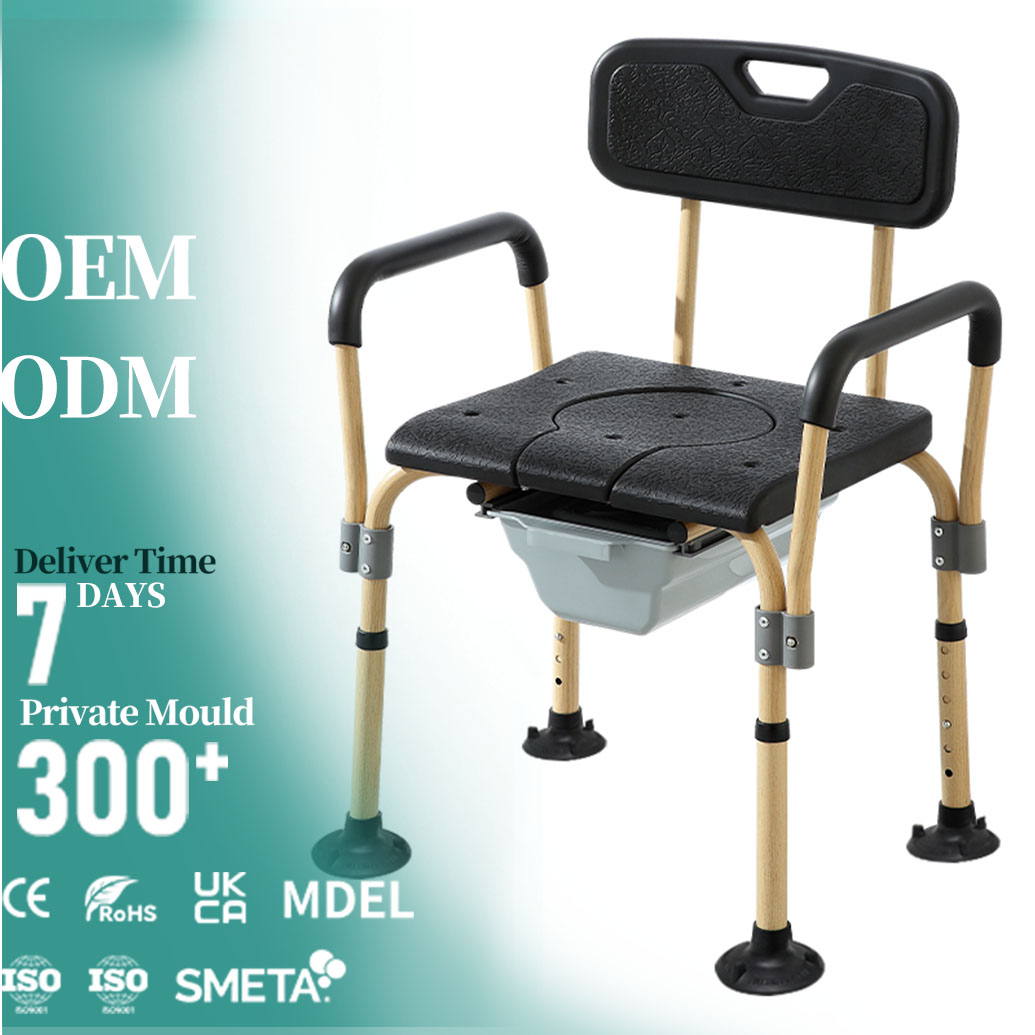
Durable Folding Commode Chair With Non Slip Design

Bathroom falls remain one of the leading causes of injury among elderly adults, driving sustained demand from nursing homes, home care agencies, and DME distributors for reliable bathing aids. JiNDA Health Care now introduces a fully updated adjustable shower chair series engineered to meet the stringent safety expectations of North American and European healthcare procurement. The new lineup features three models—standard, padded, and folding—each built with anodized aluminum frames rated for up to 150 kg. Every unit incorporates a textured, anti-slip seat surface with strategically placed drainage holes, reducing water accumulation and slip risk. Tool-free height adjustment across six positions allows caregivers to customize seat height between 37 cm and 52 cm in seconds, accommodating a wide range of patient needs without inventorying multiple SKUs. For distributors targeting long-term care facilities, the folding model offers a compact storage footprint that simplifies logistics and reduces warehousing costs. All models include non-slip rubber tips on each leg, and the padded variant adds a comfortable, easy-to-clean cushion suited for extended bathing sessions in rehabilitation settings. Every chair ships flat-pack with clear multilingual assembly instructions, minimizing setup time on the receiving end. As a manufacturer with 18 years of OEM/ODM experience and ISO 13485 certification, JiNDA can customize seat dimensions, weight capacities, frame finishes, and branding to match private-label programs. With US local stock available for rapid fulfillment, the new shower chair series presents a competitive opportunity for wholesalers seeking certified, cost-effective bathing safety solutions. Contact the JiNDA team today for volume pricing and sample arrangements.


JiNDA Introduces Heavy-Duty Bariatric Walker Series

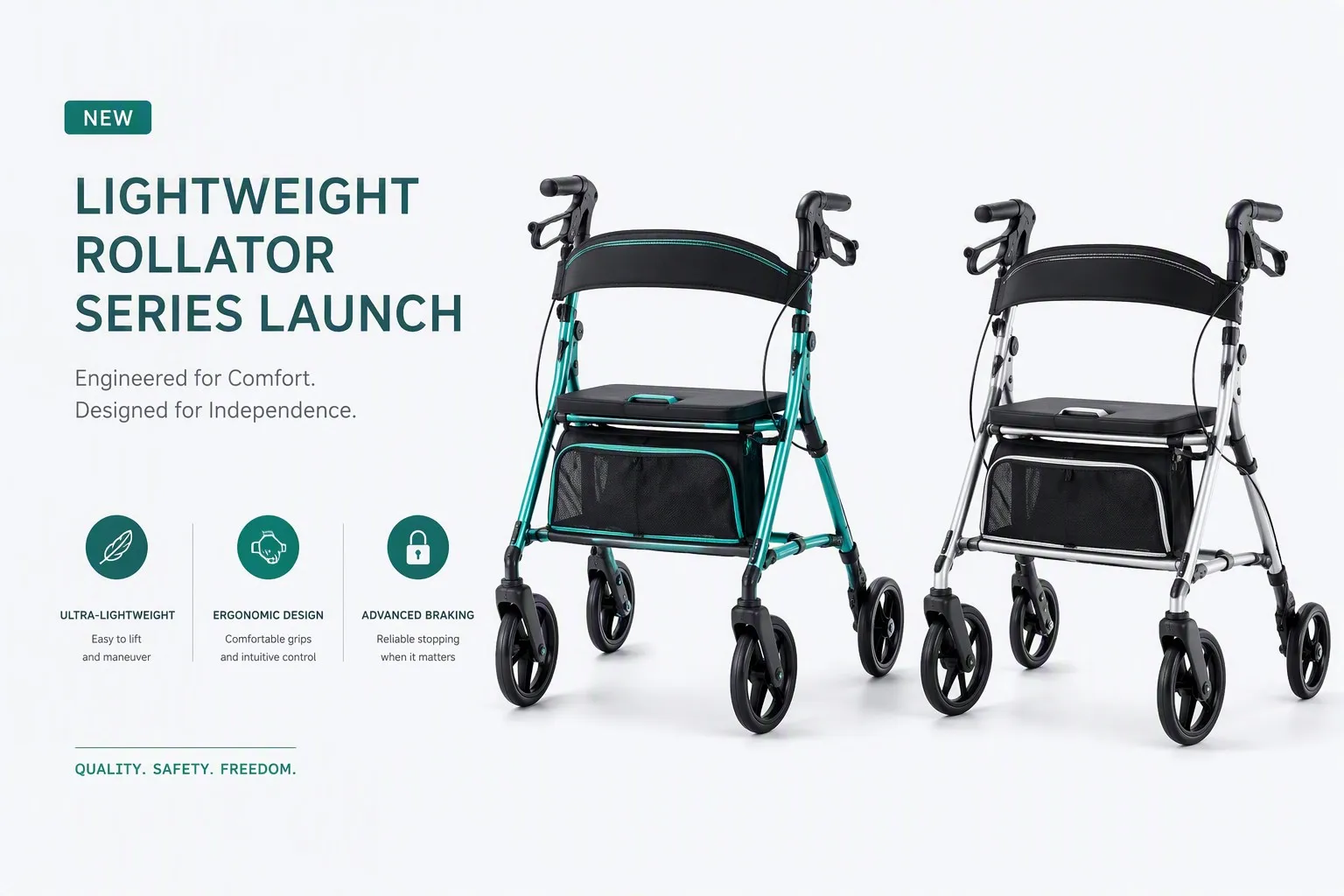
JiNDA lightweight rollator series product catalog shot

Rising obesity rates among elderly populations have created significant demand for mobility aids that support higher weight capacities without sacrificing maneuverability or comfort. Addressing this gap, JiNDA Health Care has expanded its product portfolio with a new heavy-duty bariatric walker series designed for users up to 180 kg (400 lbs). The new series features reinforced aluminum frames with widened bases for enhanced stability, adjustable-height handgrips ergonomically contoured to reduce wrist strain, and oversized non-slip rubber tips that improve traction on smooth clinical floors. Each unit folds compactly for storage and transport, maintaining the portability that healthcare facilities and home care providers require. Bariatric mobility products represent one of the fastest-growing segments in the assistive device market. Nursing homes and rehabilitation centers increasingly specify weight capacity as a primary selection criterion, and distributors who stock higher-capacity options capture margin advantages over standard-line-only competitors. JiNDA’s OEM and ODM capabilities allow wholesale partners to customize frame dimensions, color finishes, and branding to match regional market preferences. All models in the bariatric series undergo JiNDA’s standard quality control protocol, including static load testing, fatigue cycling, and surface finish inspection under ISO 13485-certified procedures. Samples are available for qualified B2B buyers — contact the JiNDA sales team to discuss volume pricing and private-label configurations.