
Mobility Aids Industry Trends in 2026: What B2B Distributors Need to Know

Global mobility aids market trends and data visualization

Mobility Aids Industry Trends in 2026: What B2B Distributors Need to Know Six trends are reshaping the mobility aids industry in 2026, and each one changes what distributors should stock, specify, and source. The most visible shift is materials: carbon fiber and aerospace-grade aluminum are displacing steel in premium rollators and wheelchairs. Demand for smart, connected devices is rising as digital health spending accelerates. Sustainability, regulatory harmonization, and the bariatric segment are also moving procurement decisions. For B2B distributors serving North American healthcare buyers, understanding these mobility aids industry trends in 2026 is the difference between leading a category and competing on price alone. This guide explains each trend, the data behind it, and the practical implications for your product portfolio. Key Takeaways Lightweight materials dominate new product development: carbon fiber and 7000-series aluminum cut device weight by 25–40% versus steel. Smart mobility devices are moving from novelty to standard SKU as digital health spending reaches $347.4 billion in 2025 (Grand View Research, 2025). Sustainability is now a procurement criterion: 93% of the world’s 250 largest companies embed sustainability into operations and sourcing (Practice Greenhealth, 2024). EU MDR transition deadlines run through December 2028 (European Commission, 2024), making regulatory files a competitive advantage. The bariatric segment is growing faster than the core market as adult obesity prevalence reaches 41.9% in the US (CDC, 2023). What is driving the shift to lightweight materials? End users consistently rank weight as a top purchase barrier for mobility aids. A rollator that is difficult to lift is a rollator that gets abandoned — which means warranty claims and returns for distributors. Manufacturers respond with carbon fiber frames and aerospace-grade aluminum alloys that cut weight without sacrificing load capacity. The clinical case is equally strong. Heavier devices increase fall risk during transfers and amplify caregiver strain, which matters to nursing homes and home care agencies that track staff injury rates. For B2B buyers, the material choice affects freight costs, SKU count, and the price point you can justify to clinical customers. Material comparison at a glance: Property Traditional steel Aerospace-grade aluminum Carbon fiber Weight Heavy (baseline) 25–40% lighter 30–50% lighter Cost per unit Lowest Mid Highest Durability High High High (brittle on impact) Recyclability Excellent Excellent Limited Typical application Institutional, bariatric Rollators, canes, wheelchairs Premium rollators, sport models What is driving demand for smart and connected mobility devices? The digital health market reached $347.4 billion in 2025 and is growing at a 23.4% CAGR (Grand View Research, 2025). Mobility aids are absorbing that momentum through features such as fall detection, Bluetooth activity tracking, and adjustable resistance that syncs with therapy apps. For distributors, the implication is operational, not speculative. Smart SKUs carry higher margin, attract younger caregivers who expect data, and differentiate your catalog from pure price competition. The trade-off is complexity: firmware updates, battery logistics, and return protocols differ from mechanical products. Start with one connected category — rollators are the natural entry point — before expanding across the range. Why is sustainability becoming a sourcing requirement? Healthcare organizations are publishing net-zero commitments, and their suppliers must follow. 93% of the world’s 250 largest companies now embed sustainability into their operations and procurement strategies (Practice Greenhealth, 2024), and hospital GPOs are extending those expectations to mobility aid manufacturers. Buyers are asking concrete questions: What share of the frame is recycled aluminum? Is packaging plastic-free? What is the product’s end-of-life pathway? Distributors who can answer with documented data win preferred status; those who cannot face growing RFP friction. Manufacturers with single-material frames — such as aluminum — have a structural advantage because the metal is infinitely recyclable without quality loss. What does the direct-to-consumer channel shift mean for distributors? Manufacturers increasingly sell direct to consumers online, which compresses distributor margins on commodity items. The defense is specialization: clinical consultative selling, bariatric and custom configurations, and value-added services such as fitting and delivery. Distributors that bundle products with installation, training, and service contracts retain the institutional accounts that DTC channels cannot serve. How is regulatory harmonization reshaping product portfolios? EU MDR transitional provisions remain in force until December 31, 2028 (European Commission, 2024), and FDA requirements continue to evolve in parallel. The practical effect is a widening gap between certified and uncertified manufacturers. Devices sold in both markets now need unified technical documentation, clinical evaluation summaries, and post-market surveillance plans. For distributors, regulatory alignment reduces dual-inventory risk: a supplier certified to ISO 13485 with both CE and FDA documentation lets you serve the US and Canada from one product line. Expect certification status to become a standard filter in your supplier scorecard, alongside price and lead time. Why is the bariatric segment growing faster than the core market? Adult obesity prevalence in the United States reached 41.9% between 2017 and March 2020 (CDC, 2023), and healthcare facilities are responding with larger-capacity equipment across the continuum of care. Bariatric rollators, wheelchairs, and shower chairs now represent a distinct, faster-growing category with less price competition and stronger clinical justification. The sourcing lesson: bariatric products are engineered differently, not merely scaled up. Look for reinforced frames, wider bases, higher weight ratings, and documented load testing. These are specification-driven purchases where certification files win orders. “The materials shift is real, and it is accelerating. Aerospace-grade aluminum gives manufacturers the weight savings that clinical customers demand at a price the market will accept. In five years, steel will be the exception, not the rule, in mobility products,” says Dr. Marcus Webb, Lead Materials Engineer, Advanced Mobility Materials Lab. What should distributors do with these trends now? Prioritize by margin and fit: add one lightweight rollator line, one smart SKU, and one bariatric configuration this year. Request material and recyclability data from every supplier. Review our rollator walkers range and canes and crutches catalog to benchmark specification depth, or contact the JiNDA B2B team for a portfolio review. FAQ 1. What are the biggest mobility aid trends in 2026? Lightweight materials, smart connectivity, sustainability requirements, regulatory harmonization, DTC channel shifts, and … Read more


Global Mobility Aids Market Forecast: Growth Drivers and Strategic Opportunities for B2B Buyers

Mobility aids market projected to reach 12.5 billion by 2028

Global Mobility Aids Market Forecast: Growth Drivers and Strategic Opportunities for B2B Buyers The global mobility aids market is expanding steadily, and buyers who plan around the forecast can secure better pricing and supply terms. Analysts project the personal mobility devices segment to grow from $12.9 billion in 2025 to $20.1 billion by 2033, a compound annual growth rate (CAGR) of 5.8% (Grand View Research, 2025). The wider mobility aids category shows similar momentum, rising from $7.55 billion in 2022 to a projected $13.34 billion by 2030, a 7.4% CAGR (Research and Markets, 2022). For wholesalers, distributors, nursing homes, and home healthcare providers in North America, these figures signal rising end-user demand and new pressure on pricing, lead times, and supplier qualification. This guide covers the growth drivers, regional outlook, product segments, and procurement strategies that will shape the market through 2028. Key Takeaways The mobility aids market is forecast to reach $13.34 billion by 2030 (Research and Markets, 2022), with personal mobility devices projected at $20.1 billion by 2033 (Grand View Research, 2025). Aging demographics are the primary demand engine: 2.1 billion people will be aged 60 or older by 2050, up from about 1 billion in 2020 (UN DESA, 2023). North America and Europe lead in revenue per unit; Asia-Pacific leads in unit volume. ISO 13485 certification is becoming a baseline requirement in hospital and home care RFPs. Buyers who lock in 12–24 month supply agreements reduce exposure to rising material costs and lengthening lead times. What is driving the global mobility aids market forecast? Three structural forces underpin the forecast: aging populations, rising chronic disease prevalence, and the post-pandemic shift toward home-based care. Aging demographics. The world’s population aged 60 and older will double to 2.1 billion by 2050 (UN DESA, 2023). In the United States, more than 1 in 4 adults lives with some form of disability, including 13.9% with mobility limitations (CDC, 2026). Every additional year of life expectancy adds demand for walkers, rollators, wheelchairs, and bathroom safety equipment. Chronic disease prevalence. An estimated 1.3 billion people — 16% of the global population — experience significant disability (WHO, 2023). Conditions such as osteoarthritis, diabetes, and stroke sequelae create sustained, non-seasonal demand for mobility products. Home care shift. Payers and families increasingly prefer care at home over institutional settings. That shift moves equipment purchases from hospital procurement to home healthcare agencies, DME suppliers, and retail distributors — expanding the addressable market for B2B suppliers. How do regional markets compare for B2B buyers? Demand is not uniform across geographies, and each region rewards a different sourcing posture. Region Market position (2025) Primary growth driver Buyer implication North America Largest revenue base; premium pricing Aging population, Medicare/Medicaid reimbursement Prioritize certified, documentation-ready suppliers Europe Mature; strong regulatory barrier Aging demographics, CE/MDR compliance Full technical files and EU labeling are decisive Asia-Pacific Fastest unit-volume growth Rapid urbanization, expanding middle class Cost-competitive sourcing; verify quality systems North America. The United States and Canada combine the broadest reimbursement coverage with the steepest demographic curve: 1 in 4 older adults reports a fall each year (CDC, 2026), feeding demand for bathroom safety and mobility products. Institutional buyers should expect to provide product documentation, ISO 13485 certificates, and liability-conscious packaging to end customers. Europe. CE marking under the EU Medical Device Regulation (MDR) remains the dominant market barrier. Distributors increasingly require complete technical files from overseas manufacturers, which makes certified suppliers with EU-compliant labeling the lower-risk choice. Asia-Pacific. Unit volumes climb fastest here as aging societies in Japan, South Korea, and China expand coverage. For North American buyers, the region matters mainly as a sourcing base — and risk depends on the factory’s quality system, not its location. Which mobility aid product segments are growing fastest? Four segments dominate B2B procurement volume: Walkers and rollators. The walking aids market was valued at $2.2 billion in 2021 and is growing at a 7.1% CAGR (Grand View Research, 2021). Lightweight rollators lead SKU growth. Compare models in our rollator walkers range. Wheelchairs. Manual and lightweight models drive institutional repeat orders, while bariatric configurations command premium pricing. Bathroom safety. Shower chairs, commodes, and grab bars ride the aging-in-place wave and post some of the fastest category growth — see our bathroom safety equipment market analysis. Canes and crutches. High-volume, low-unit-price items that anchor distributor catalogs and generate dependable reorder cycles. How should B2B buyers adapt procurement strategy in 2026–2028? A growing market rewards buyers who act early on three fronts. 1. Lock in supply early. Demand growth tightens factory capacity during peak seasons. Distributors who commit to forecast-based orders — rather than spot buying — secure better lead times and priority allocation. 2. Diversify sourcing. Relying on a single factory concentrates risk from tariffs, logistics disruptions, and raw material price swings. A dual-sourcing strategy with certified manufacturers reduces exposure without doubling inventory. 3. Make certification a filter, not a checkbox. ISO 13485 is the international standard for medical device quality management systems (ISO). Institutional RFPs increasingly treat certification as mandatory, so a certified partner shortens qualification cycles and reduces audit burden. “Institutional buyers are no longer comparing prices alone. They compare quality systems, audit history, and the manufacturer’s ability to document compliance. In a market growing at 6–7% per year, a certified partner with stable lead times is worth a premium,” says Robert Lindqvist, Director of Procurement, NordicCare Health Supply Network. What does the forecast mean for your next sourcing decision? The data favors buyers who plan 12 to 24 months out. Confirm volume projections, evaluate supplier certification, and test small-batch orders before committing to annual contracts. Category managers at large DME chains report that supplier capacity, not price, is the binding constraint during Q3 peak demand — a pattern that repeats as the market grows (Grand View Research, 2025). “The smartest buyers treat mobility aids as a strategic category, not a commodity. They consolidate SKUs, standardize on certified suppliers, and negotiate multi-year agreements with built-in escalation clauses,” adds Dr. Elena Marchetti, Senior Market Analyst, Global … Read more

Bath Safety Equipment for Home Healthcare: A B2B Buyer’s Guide to Shower Chairs, Grab Bars, and Commodes

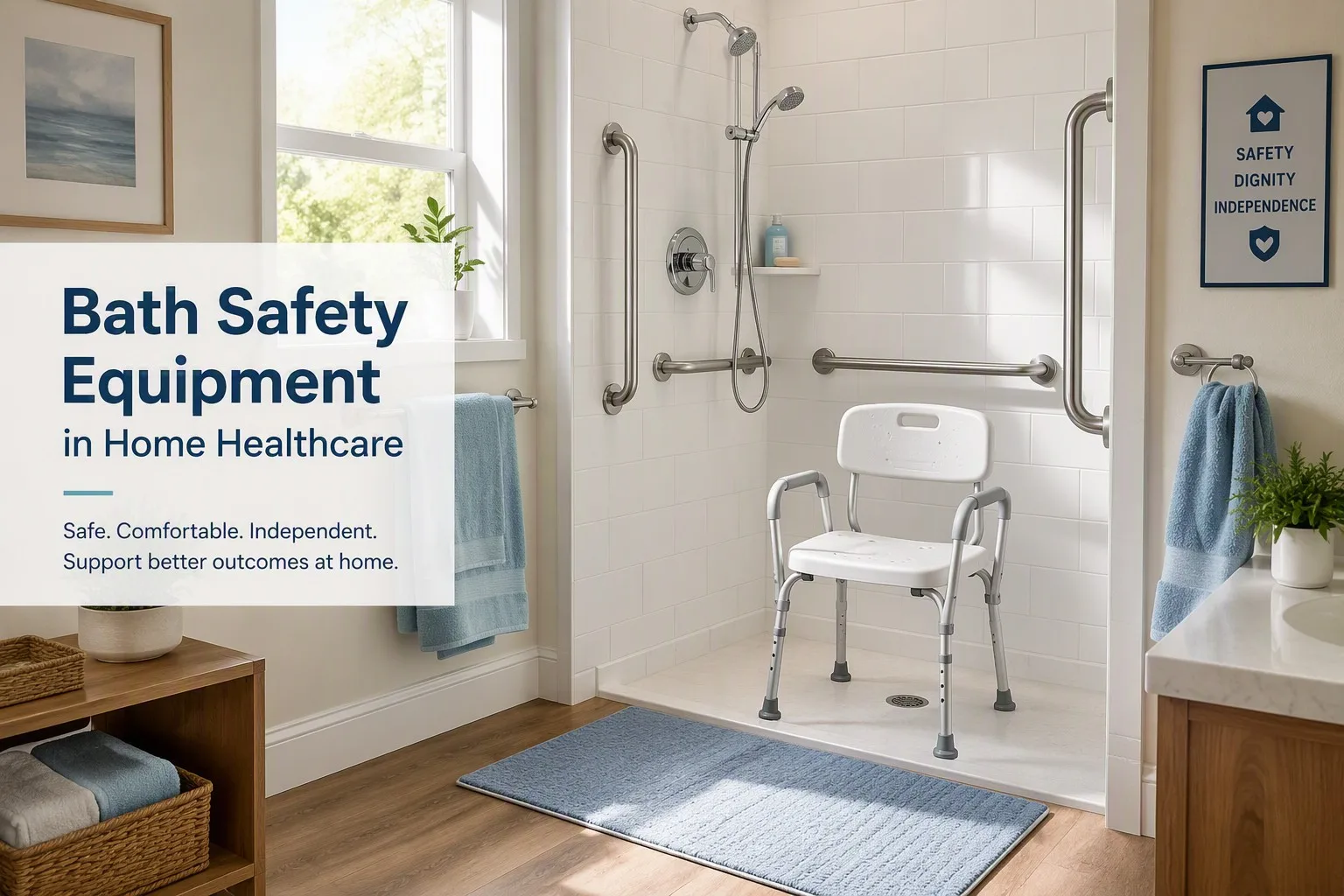
Bath safety equipment for home healthcare settings

Bath Safety Equipment for Home Healthcare: A B2B Buyer’s Guide to Shower Chairs, Grab Bars, and Commodes Bath safety equipment prevents the most common injury in home healthcare: the bathroom fall. For B2B buyers, the category covers three core products — shower chairs, grab bars, and commodes — each defined by weight ratings, materials, and clinical standards. Demand is accelerating as home healthcare expands and seniors age in place. CMS reports home health care spending reached $132.9 billion in 2022, up 6.0% from 2021. Bathroom and toilet assist devices form a $5.4 billion global market in 2025, projected to reach $9.6 billion by 2033 (Grand View Research). This guide explains what bath safety equipment includes, why falls drive demand, and how to evaluate products and suppliers. You will leave with a comparison table, a buyer’s checklist, and clear OEM/ODM guidance for your next sourcing cycle. Key Takeaways Bathroom falls are the #1 injury risk for seniors — 1 in 4 older adults falls every year (CDC, 2024). Stock three core categories: shower chairs, grab bars, and commodes — the highest-turnover items in bath safety. Specify for the heaviest user, not the average user; weight capacity is the first spec to verify. Certification sells: ISO 13485 manufacturing and ISO 9999 classification signal compliant, sellable products. OEM/ODM flexibility lets distributors brand bath safety equipment without lowering quality standards. What Is Bath Safety Equipment? Bath safety equipment is any assistive product that reduces fall risk in the bathroom. It includes seating (shower chairs, bath stools), support (grab bars, handrails), and toileting aids (commodes, raised toilet seats). The International Organization for Standardization classifies these products under ISO 9999, codes 09 33 03 (bathing chairs and seats) and 09 33 06 (bath tubs and accessories). This system gives buyers a common language for specifying products across suppliers. For distributors, this category offers three advantages. It serves a growing demographic. It generates regular replacement demand. And it fits standard logistics. A well-planned line covers three user groups: seniors at home, residents in skilled nursing, and patients in post-acute care. Why Bathroom Falls Are the #1 Injury Risk for Seniors Falls are the leading cause of injury-related death among adults aged 65 and older. The CDC (2024) reports that over 14 million older adults — 1 in 4 — fall each year, producing about 3 million emergency department visits and 1 million hospitalizations. In 2021, falls caused 38,000 deaths in this age group. The bathroom is one of the most hazardous rooms in any home. Wet surfaces, hard fixtures, and tight spaces make transfers — entering the tub or moving to the toilet — the highest-risk movements of the day. Occupational therapists rank bathroom modification as a first-line fall prevention strategy. The WHO (2021) falls fact sheet names environmental hazards and a lack of assistive devices among the major risk factors. For B2B buyers, the clinical case is also a commercial case. Facilities that prevent falls reduce liability and readmissions. Agencies that supply bath safety equipment improve outcomes and patient retention. “The bathroom is where the day’s riskiest movements happen,” says Dr. Elena Rodriguez, OTD, OTR/L, Clinical Director at HomeSafe Rehabilitation Services. “A correctly selected shower chair or grab bar turns a dangerous transfer into a routine one. For facilities, that translates directly into fewer falls, fewer readmissions, and better outcomes.” The 3 Product Categories to Stock Shower Chairs Shower chairs provide seated support during bathing. They come in standard, bariatric, and folding configurations. Standard models carry 250–350 lb (113–159 kg). Bariatric models reach 500–800 lb (227–363 kg). Folding models prioritize portability and small bathrooms. Browse the shower chair range for aluminum frames, adjustable legs, and tool-free assembly. Grab Bars Grab bars give users a secure handhold during transfers. Wall-mounted steel bars with anti-slip texture are the clinical standard. Suction-cup bars suit travel, but clinicians recommend daily checks and treat them as temporary aids. Key specs include load rating, flange size, and stud compatibility. Commodes Commodes solve toileting access problems. A 3-in-1 model works as a bedside commode, an over-toilet seat, and a shower chair. View commode models with removable pails, padded seats, and tool-free conversion. Bath Safety Equipment Comparison Table Product Type Weight Capacity Key Features Best For Price Tier Standard shower chair 250–350 lb Aluminum frame, adjustable legs, tool-free assembly Everyday bathing support Entry Bariatric shower chair 500–800 lb Reinforced frame, wider seat, removable armrests Higher-weight users Premium Folding shower chair 250–400 lb Compact fold, portability, height-adjustable Small bathrooms, travel Mid Grab bar 250–500 lb Wall-mounted steel, anti-slip grip Entry and transfer support Entry 3-in-1 commode 300–500 lb Bedside, over-toilet, shower use Toileting safety Mid How to Choose Bath Safety Equipment: A Buyer’s Checklist Use this checklist to qualify products before you place an order. Confirm user weight and mobility level. Match weight capacity to the heaviest user, plus a safety margin. Measure bathroom dimensions. Door width, tub depth, and floor space determine which products fit. Check floor and drainage conditions. Non-slip feet and drainage holes prevent water pooling and slips. Review caregiver needs. Tool-free assembly, easy cleaning, and removable parts reduce staff burden. Verify certifications and test reports. Look for ISO 13485 manufacturing and documented load testing. Confirm MOQ, lead time, and warranty. Clear commercial terms protect your margin and your clients. OEM/ODM Customization for Distributors Private labeling is a standard growth lever in this category. Manufacturers with in-house tooling can customize bath safety equipment with your brand, colors, packaging, and spec changes — from seat width to frame finish. JiNDA supports OEM/ODM projects with engineering review, sample approval, and QC before shipment. Minimum order quantities typically start at container-level volume. Lead times vary with customization depth. Always request a spec sheet, load test report, and packaging mockup before committing. Market Outlook: Why Home Healthcare Demand Is Growing Three data points frame the opportunity. Grand View Research (2025) values the bathroom and toilet assist devices market at $5.4 billion, growing to $9.6 billion by 2033. CMS (2022) reports home health care spending rose … Read more