
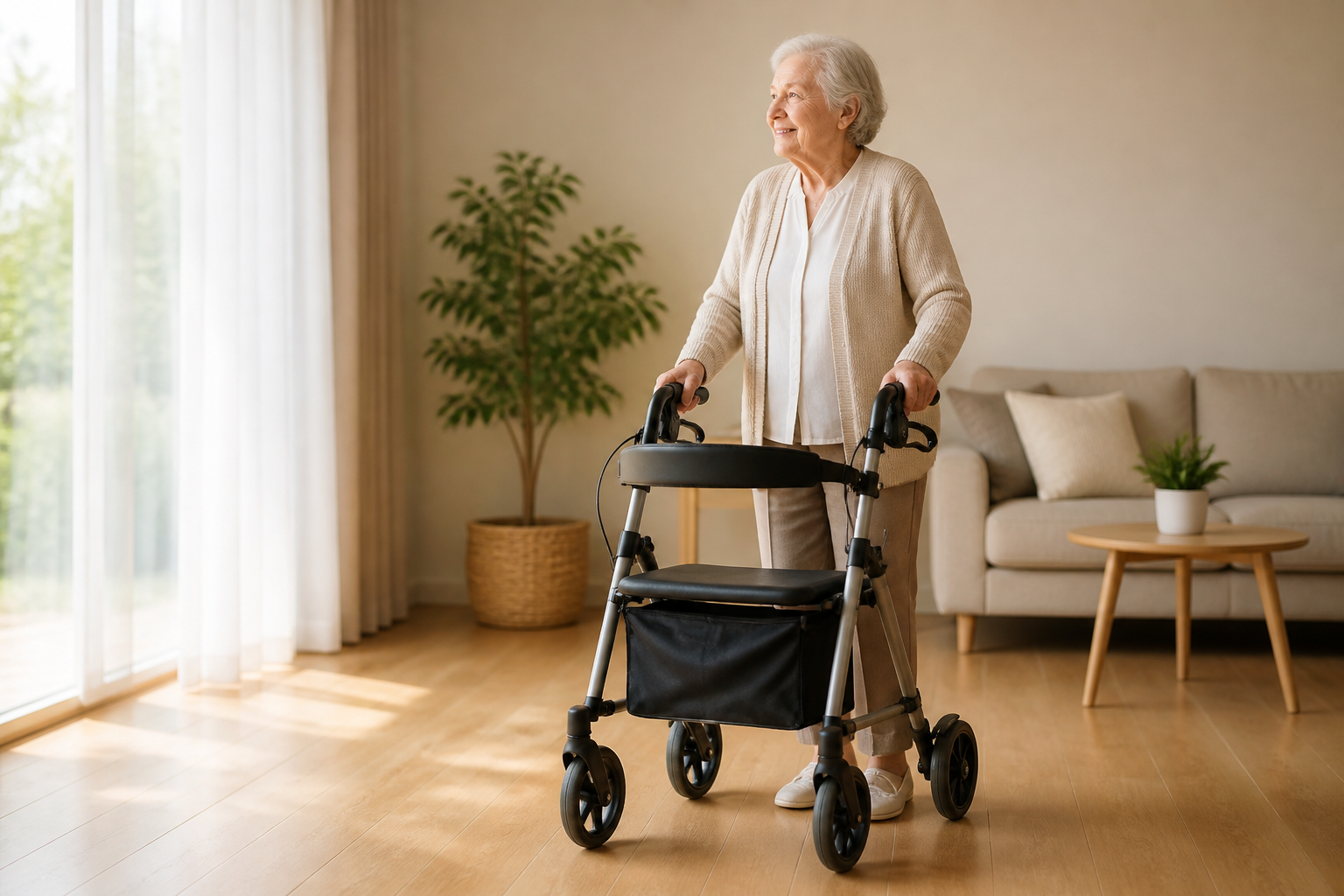
Healthcare systems across North America, Europe, and Asia-Pacific are moving long-term care out of institutions and into the home. Aging-in-place policies, shorter hospital stays, and a growing preference for independent living have turned home rehabilitation equipment into a procurement priority — for distributors, homecare chains, and medical supply wholesalers alike.
Why Aging-in-Place Is Reshaping Procurement
Demographic pressure is the underlying driver. As populations over 65 expand and chronic conditions such as osteoarthritis, stroke recovery, and reduced mobility become more common, demand for walkers, rollators, canes, and related assistive devices keeps rising.
Reimbursement frameworks in many markets now favor cost-effective home-based recovery over extended institutional care. The result: procurement budgets are shifting toward mobility aids that patients and caregivers can use safely without specialized training.
What Distributors Should Prioritize Now
For B2B buyers, the practical implications are clear. When evaluating product lines, weight these factors more heavily than in previous cycles:
- Lightweight construction — easier for seniors to handle and for caregivers to transport
- Compact folding — fits car trunks, closets, and narrow hallways
- Adjustable sizing — one model can serve a wider range of users
- Low-maintenance operation — reduces total cost of ownership for facilities
- Supply-chain reliability — stable capacity and consistent quality control over one-off sourcing
How JiNDA Supports B2B Partners
JiNDA Health Care has built its product ecosystem around exactly these requirements, with a range spanning home-care, rehabilitation, and hospital applications. Flexible OEM/ODM customization and dependable lead times make it straightforward for wholesale partners to plan their next procurement cycle with confidence.
To discuss how our mobility aid portfolio can strengthen your product range, contact our B2B team at [email protected].