
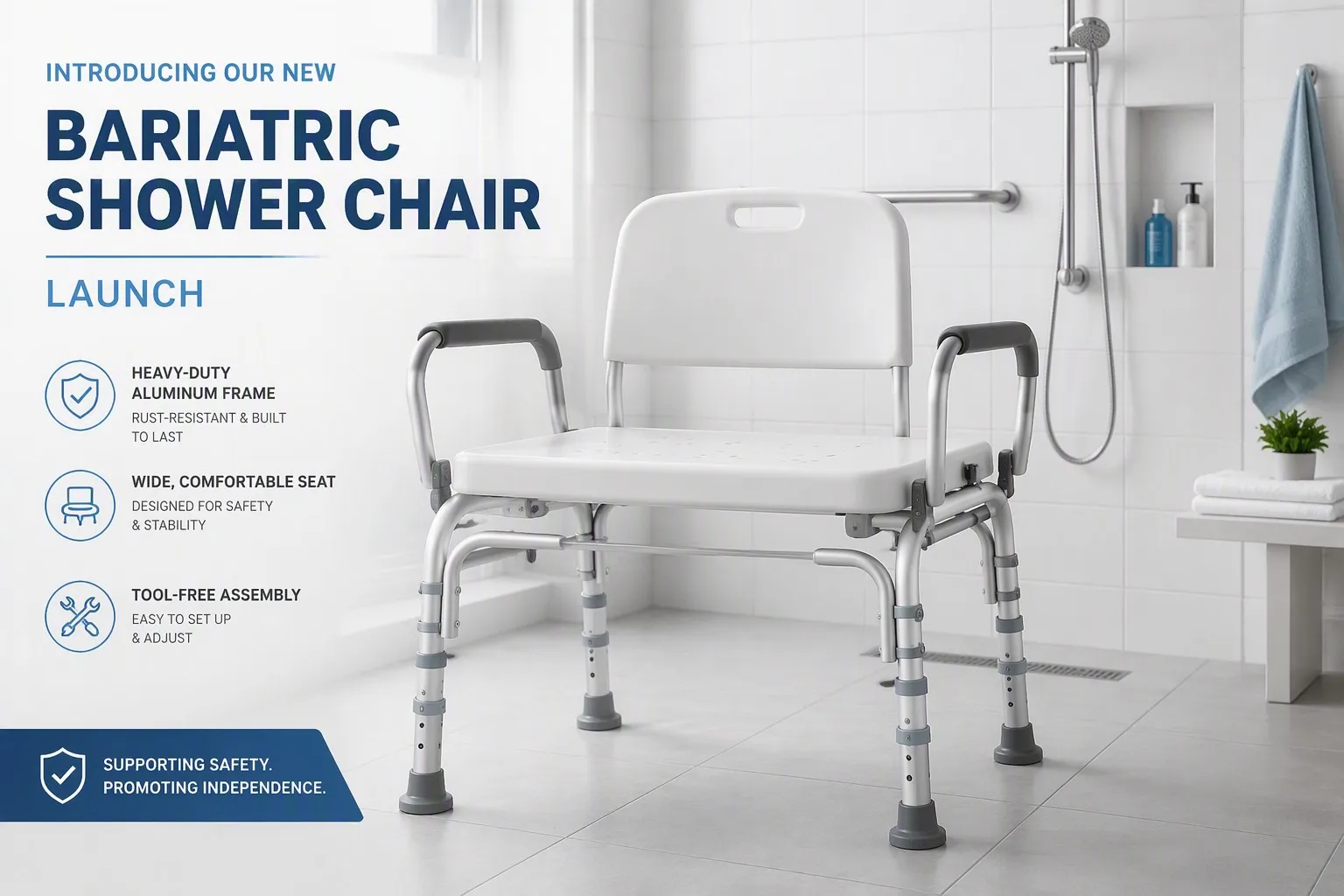
Bariatric Shower Chairs: How to Choose Heavy-Duty Bath Safety Equipment for Higher-Weight Users
A bariatric shower chair is heavy-duty bathing equipment built for users above standard weight limits — typically rated for 250 kg (550 lb) or more, with a reinforced frame and a wider seat. JiNDA Health Care has just launched its next-generation model with a 250 kg capacity, 55 cm seat width, removable armrests, anodized aluminum frame, and a 5-year warranty. For distributors, bariatric bath safety is one of the fastest-growing specialty niches in home healthcare. The CDC (2024) reports 40.3% of U.S. adults have obesity (August 2021–August 2023), and Grand View Research values the global bariatric medical chairs market at $484.8 million (2022), growing at a 7.02% CAGR through 2030. This guide defines what makes a chair bariatric, lists the specs that matter, and shows how JiNDA’s new model answers real facility needs.
Key Takeaways
- Bariatric means 250 kg (550 lb) or more of rated capacity, plus a reinforced frame and wider seat.
- Demand is data-backed: adult obesity prevalence reached 40.3% in the U.S. (CDC, 2024).
- Frame material decides durability — anodized aluminum resists corrosion without steel’s excess weight.
- Removable armrests ease transfers and multiply the clinical use cases for a single SKU.
- JiNDA’s new model ships with a 5-year warranty and full OEM customization options for distributors.
What Is a Bariatric Shower Chair?
A bariatric shower chair is a bathing seat engineered for users who exceed standard product limits. The clinical definition centers on three elements: weight capacity of 250 kg (550 lb) or higher, a reinforced frame, and a seat wide enough for safe, dignified positioning. Standard shower chairs typically carry 113–159 kg (250–350 lb). Anything above that range enters bariatric territory.
The design goals are specific. The frame must distribute load without flexing. The seat must reduce pressure and fit the user’s body. The legs must stay stable on wet surfaces. For facilities, a proper bariatric chair protects both the patient and the caregiver. It eliminates unsafe lifting and reduces fall risk during a high-exposure activity: bathing.
Why Demand for Bariatric Bath Equipment Is Growing
Three trends explain rising demand. First, obesity prevalence is at record levels. The CDC (2024) reports 40.3% of U.S. adults have obesity and 9.7% have severe obesity. The WHO notes global obesity has nearly tripled since 1975. Second, more care is moving into the home, where standard equipment was never designed for heavier users. Third, caregiver safety regulations push facilities toward mechanical support. The result: Grand View Research (2023) projects the bariatric medical chairs market to grow from $484.8 million (2022) at a 7.02% CAGR through 2030. Bariatric bath safety is no longer a niche add-on; it is a required line item.
5 Specifications to Evaluate Before You Buy
1. Frame Material
Aluminum and steel are the two options. Steel offers maximum strength but adds weight and corrosion risk. Anodized aluminum provides a strong, corrosion-resistant, lighter frame — the preferred choice for bariatric bathing products that face daily moisture.
2. Weight Capacity
Match capacity to your heaviest user, then add a safety margin. Verify the number with a load test report, not just a marketing claim. JiNDA’s new chair rates at 250 kg (550 lb) with documented testing.
3. Seat Width
Standard seats run 40–46 cm. Bariatric seats start near 50–55 cm. A wider seat distributes pressure and improves comfort. Confirm seat depth and the gap between seat and legs as well.
4. Armrest Type
Fixed armrests offer simplicity. Removable armrests ease lateral transfers from a wheelchair or bed and expand the chair’s clinical use. For facilities, removable armrests reduce staff strain.
5. Drainage and Cleaning
Look for drainage holes in the seat, removable parts, and surfaces that withstand disinfectants. Infection control is a purchasing criterion in skilled nursing and home care alike.
Bariatric Shower Chair Comparison Table
| Product | Weight Capacity | Seat Width | Frame | Key Feature | Best For |
|---|---|---|---|---|---|
| Standard shower chair | 250–350 lb | 40–46 cm | Aluminum | Lightweight, tool-free assembly | Everyday bathing |
| Bariatric shower chair | 500–800 lb | 50–55 cm | Anodized aluminum or steel | Reinforced frame, wide seat | Higher-weight users |
| Bariatric commode | 500–800 lb | 50–55 cm | Steel or aluminum | Bedside, over-toilet, and shower use | Toileting plus bathing |
JiNDA’s Next-Generation Bariatric Shower Chair
JiNDA’s new bariatric model is engineered for the demands of institutional use. The core specs:
- 250 kg (550 lb) weight capacity with documented load testing
- 55 cm seat width for safe, comfortable positioning
- Removable armrests for easier lateral transfers
- Anodized aluminum frame for corrosion resistance and durability
- 5-year warranty — a benchmark for the category
- ISO 13485 certified manufacturing with full QC documentation
The chair is designed for distributors who serve nursing homes, home healthcare agencies, and DME suppliers. It ships with options for bariatric shower chairs in standard packaging or fully customized private-label programs.
“Facilities often underestimate how much a heavier patient changes the care plan,” says Margaret Chen, RN, BSN, Bariatric Care Specialist at Evergreen Post-Acute Network. “A chair with real load rating, removable armrests, and a wide seat is not a luxury. It is the difference between a safe bath and a high-risk event for both the patient and the caregiver.”
OEM Customization for Distributors
Bariatric equipment is a strong candidate for private labeling because clinical buyers trust established specifications. JiNDA’s OEM program covers branding, color, packaging, and spec adjustments within certified limits. Distributors can also pair the chair with walkers and rollators to build a full heavy-duty catalog. Standard MOQs and lead times apply; custom programs include sample approval and pre-shipment inspection.
FAQ: Bariatric Shower Chairs
Q1: What weight capacity defines a bariatric shower chair?
A chair qualifies as bariatric at 250 kg (550 lb) of rated capacity or higher, with a reinforced frame and wider seat.
Q2: Aluminum or steel — which frame is better?
Anodized aluminum resists corrosion and weighs less. Steel is heavier but can be specified for the highest capacities. Choose based on the environment and user profile.
Q3: Why do removable armrests matter?
They allow lateral transfers from a wheelchair or bed, reducing caregiver strain and fall risk during transfers.
Q4: What warranty should I expect on bariatric equipment?
One to three years is common. JiNDA’s new model leads the category with a 5-year warranty.
Q5: Can bariatric shower chairs be private-labeled?
Yes. OEM/ODM programs cover branding, colors, packaging, and certified spec changes, subject to MOQ.
Q6: What seat width should I specify?
For bariatric users, specify 50–55 cm. Verify seat depth and weight distribution with the load test report.
Written by JiNDA Health Care | Reviewed by Dr. James Palmer, PT, DPT, ATP — Clinical Education Advisor
Last updated: August 2026