
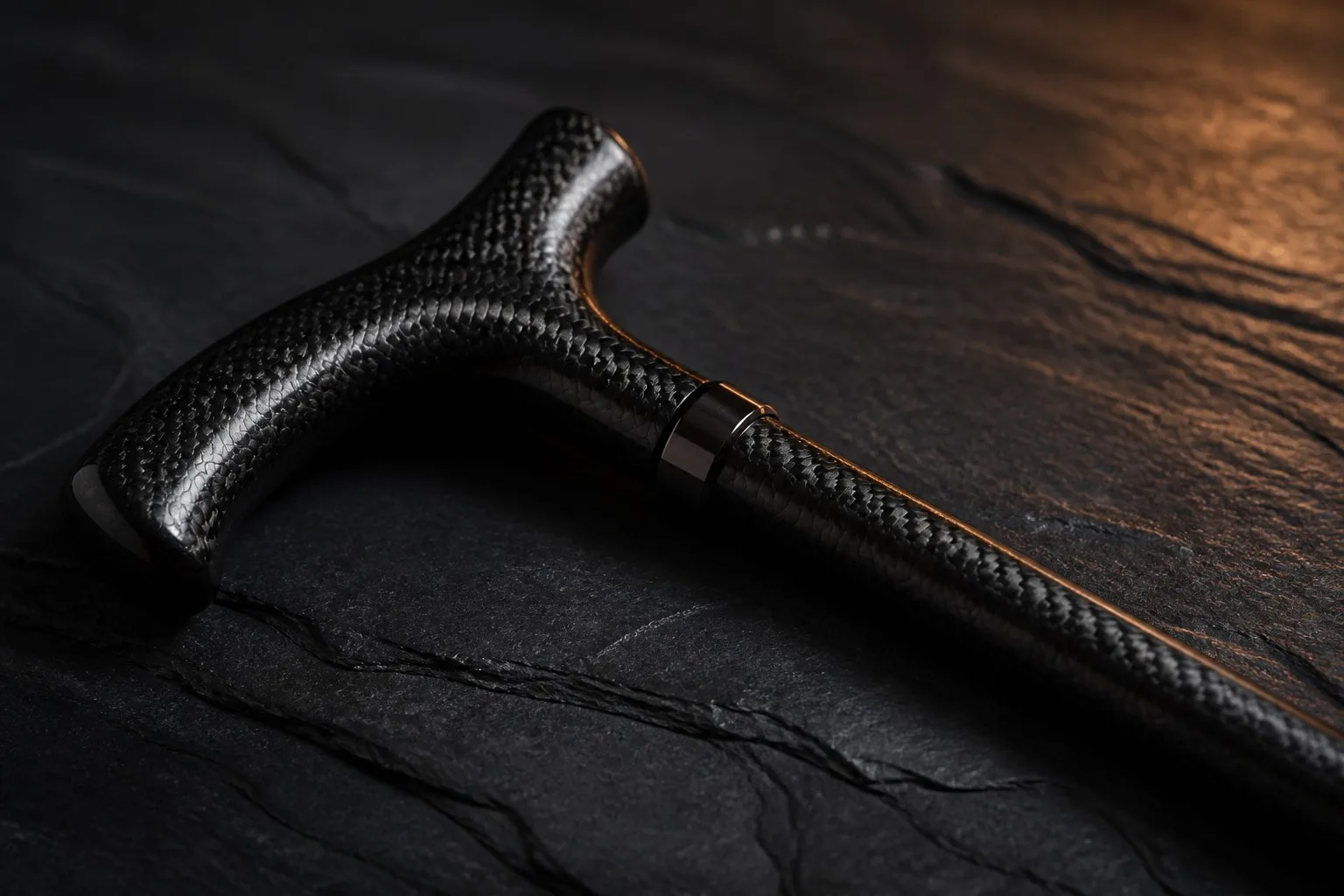
Carbon Fiber Walking Canes: Why Ultralight Materials Are the Future of Mobility Aids
Carbon fiber walking canes weigh 40–60% less than aluminum while offering equal or greater strength. For users with arthritis, post-surgical weakness, or general fatigue, that weight difference means less grip strain and a more confident stride. The market is moving in the same direction. Grand View Research (2022) values the global walking aids market at $2.4 billion, projected to reach $4.2 billion by 2030 at a 7.1% CAGR. The CDC (2021) reports 53.2 million U.S. adults live with diagnosed arthritis, the largest group of cane users. This guide compares carbon fiber against aluminum and wood, identifies who benefits most, and explains the B2B opportunity in premium ultralight mobility aids.
Key Takeaways
- Carbon fiber cuts cane weight by 40–60% versus aluminum, with equal or better strength.
- Lighter canes reduce grip fatigue — a direct clinical benefit for arthritis and post-surgery users.
- Vibration dampening is a real advantage: carbon fiber absorbs shock better than metal or wood.
- Premium positioning pays: ultralight canes command higher margins in the walking aids segment.
- JiNDA’s carbon fiber cane combines an ergonomic grip, adjustable height, and multiple tip options.
What Is a Carbon Fiber Walking Cane?
A carbon fiber walking cane is a mobility aid with a shaft made from carbon fiber composite instead of aluminum, steel, or wood. Carbon fiber is a material of woven filaments set in resin, offering an exceptional strength-to-weight ratio. A typical carbon cane weighs 250–400 g (9–14 oz) — roughly half the weight of an aluminum cane.
The engineering trade-offs matter in daily use. A lighter cane is easier to lift, position, and control with each step. For users who lean on the cane throughout the day, that repeated weight reduction is significant. Over 1,000 steps a day, a difference of 300 g means 300 kg less load lifted through the wrist and shoulder.
Carbon Fiber vs. Aluminum vs. Wood: Material Science
Weight
Aluminum canes run 500–700 g. Wood canes run 600–800 g. Carbon fiber runs 250–400 g — a 40–60% reduction that users feel immediately.
Strength-to-Weight Ratio
Carbon fiber’s tensile strength per unit weight exceeds aluminum and steel. The shaft can be thinner and lighter while carrying the same rated load. Quality carbon canes are load-tested to 136 kg (300 lb) or more.
Vibration Dampening
Carbon fiber absorbs impact vibration better than aluminum. Each step transmits less shock through the shaft to the user’s hand, wrist, and shoulder — a meaningful advantage for arthritis patients.
Fatigue Resistance
Metal can fatigue and bend over years of use. Carbon fiber resists cyclic fatigue well and does not corrode. It also survives temperature swings that affect some materials.
Walking Cane Material Comparison Table
| Material | Weight | Max Load | Durability | Cost | Best Use Case |
|---|---|---|---|---|---|
| Carbon fiber | 250–400 g | 136 kg+ | High, corrosion-free | Premium | Daily use, arthritis, active seniors |
| Aluminum | 500–700 g | 136 kg | Good, low corrosion | Entry–Mid | General purpose, value lines |
| Wood | 600–800 g | 120–136 kg | Good, needs finish care | Mid | Traditional style, short-term use |
Who Benefits Most from an Ultralight Cane
Arthritis Patients
CDC (2021) data shows arthritis affects over 53 million U.S. adults. Grip and wrist pain make every gram of cane weight matter. An ergonomic grip paired with a light shaft reduces joint load on every step.
Post-Surgery Recovery
Patients recovering from hip or knee surgery have limited strength and endurance. A light cane is easier to control during the critical early weeks of weight-bearing recovery, when a stumble is most costly.
Active Seniors
Older adults who walk daily for health benefit from reduced fatigue. A carbon cane folds into a bag for outings and provides support without demanding strength from the user. The result is more steps, more independence, and better long-term health.
“Weight is not a minor specification — it is a clinical variable,” says Dr. Michael Osei, PT, DPT, Director of Rehabilitation at Lakeshore Mobility Clinic. “Every step, the user lifts the cane and repositions it. Reduce the weight by half and you reduce cumulative joint stress by half. For arthritis patients, that is the difference between using the cane and abandoning it.”
JiNDA’s Ergonomic Ultra-Light Carbon Fiber Walking Stick
JiNDA’s new carbon fiber cane is engineered for the premium segment of the market:
- Ultralight shaft — 40–60% lighter than aluminum equivalents
- Ergonomic grip — contoured handle reduces pressure on hand and wrist
- Adjustable height — tool-free settings match user stature and clinician prescription
- Multiple tip options — single-tip and quad-tip bases for different stability needs
- Load-tested construction — verified to rated capacity with full QC documentation
- ISO 13485 certified manufacturing
The cane is available through the walking canes and crutches line and pairs with walkers and rollators for a complete mobility range.
The B2B Opportunity: Premium Positioning and Margins
Ultralight canes fit a proven market strategy: premium materials, clinical messaging, and higher price points. Where standard aluminum canes compete on price, carbon fiber competes on outcomes — less fatigue, less pain, more independence. That shift supports higher unit margins for distributors and DME providers.
Demand drivers are structural. The walking aids market is growing at 7.1% CAGR (Grand View Research, 2022). The 65+ population is expanding. And aging consumers increasingly choose quality over price. For distributors, adding a carbon fiber SKU captures that premium demand without cannibalizing the value line. OEM customization — branding, colors, grip options, and packaging — lets you launch the segment under your own brand.
FAQ: Carbon Fiber Walking Canes
Q1: How much lighter is a carbon fiber cane than aluminum?
Carbon fiber canes weigh 40–60% less — typically 250–400 g versus 500–700 g for aluminum.
Q2: Is carbon fiber strong enough for daily use?
Yes. Quality carbon canes are load-tested to 136 kg (300 lb) or more and resist corrosion and fatigue better than metal over time.
Q3: Who benefits most from a carbon fiber cane?
Arthritis patients (reduced grip fatigue), post-surgery patients (easier control), and active seniors (less overall fatigue).
Q4: Does carbon fiber cost more?
Yes, at retail it sits in the premium tier. That premium also means higher distributor margins and stronger differentiation.
Q5: What tip options are available?
Single-tip and quad-tip bases. Quad tips add stability; single tips suit more active users on varied terrain.
Q6: Can I private-label carbon fiber canes?
Yes. JiNDA’s OEM program covers branding, colors, grip options, and packaging, subject to MOQ and sample approval.
Written by JiNDA Health Care | Reviewed by Dr. James Palmer, PT, DPT, ATP — Clinical Education Advisor
Last updated: August 2026