
As global healthcare systems intensify their focus on environmental responsibility, sustainability has moved from a peripheral concern to a central criterion in B2B procurement decisions. Mobility aid manufacturers that integrate eco-conscious practices into their production pipelines are gaining a measurable edge when competing for contracts with hospital networks, GPOs, and government tenders.
Key sustainability drivers reshaping the industry include the adoption of recyclable aluminum and carbon fiber composites, energy-efficient factory operations certified under ISO 14001, and reduced packaging waste through returnable shipping containers. For distributors, sourcing from manufacturers with documented environmental credentials simplifies compliance with increasingly stringent ESG mandates in North American and European markets.
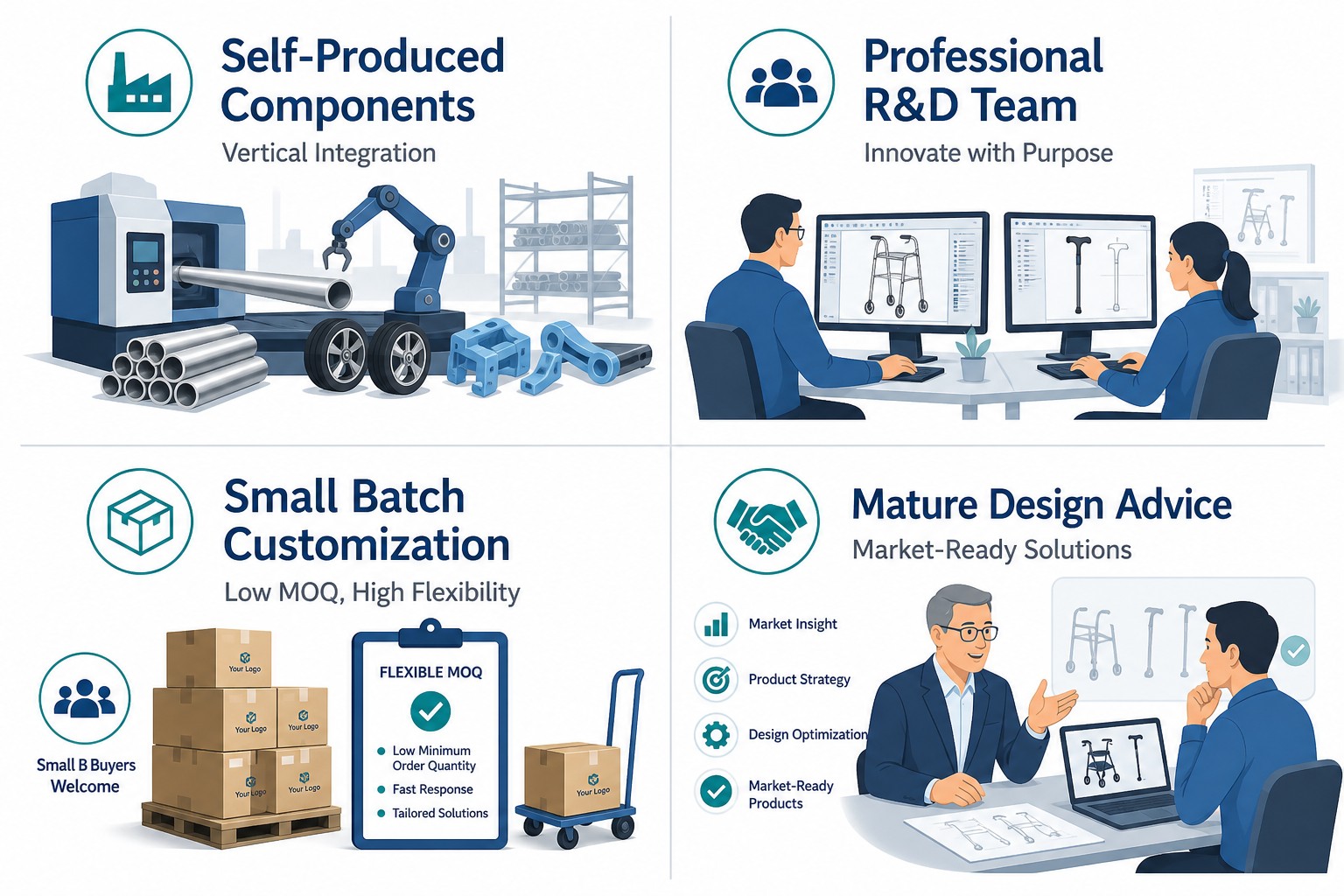
JiNDA Health Care has aligned its manufacturing processes with these evolving standards, maintaining ISO 13485 certification while progressively incorporating sustainable material sourcing and lean production techniques. The company’s 18-year track record in aluminum and carbon fiber fabrication demonstrates that durability and environmental responsibility can coexist without compromising product performance.
For procurement professionals evaluating long-term supply partnerships, sustainability is no longer a “nice-to-have” — it is a qualification threshold. Manufacturers who can document their environmental footprint reduction alongside consistent product quality will secure preferred vendor status in the next generation of healthcare contracts.