
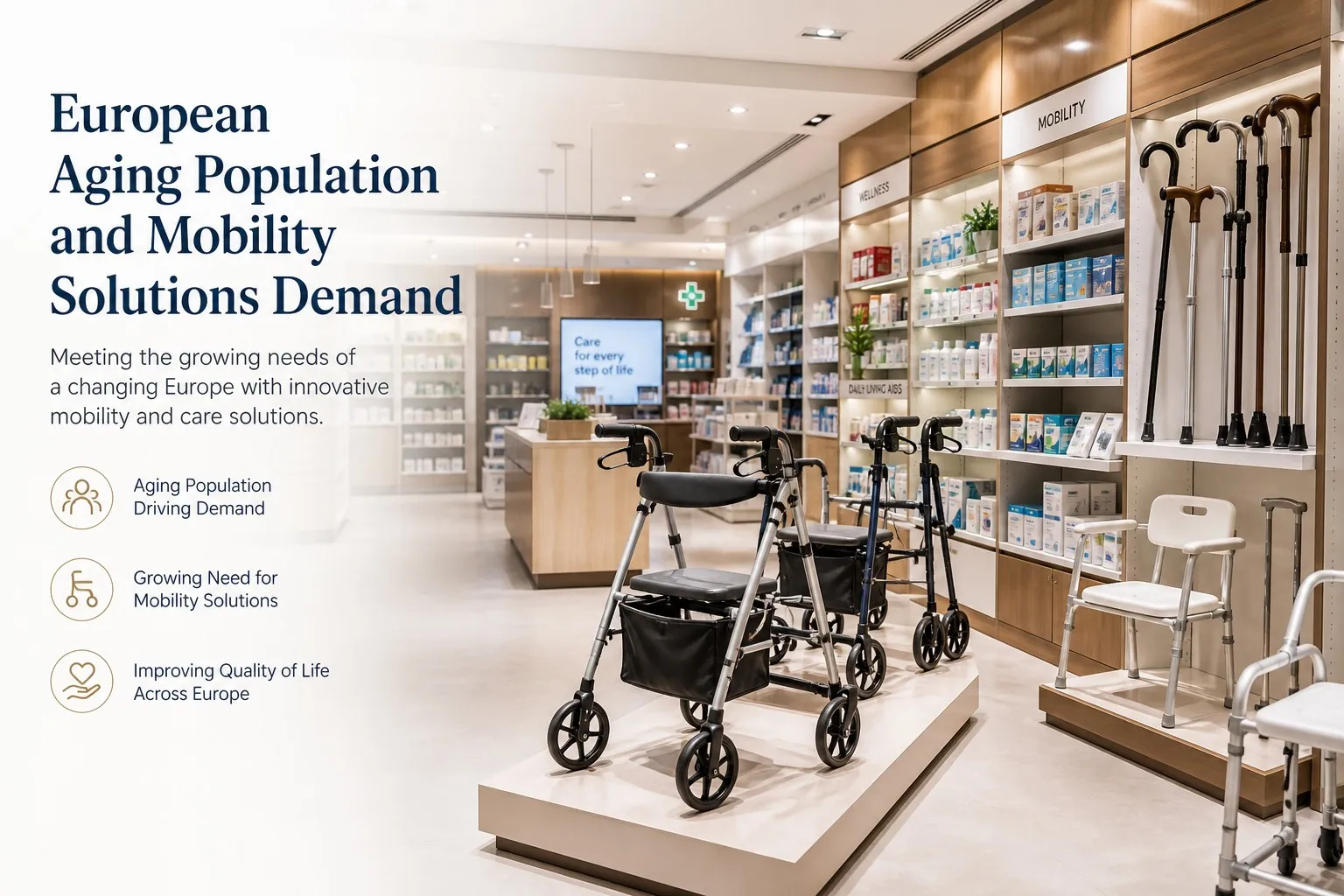
The world’s population is aging faster than at any point in modern history, and governments are responding with policies that turn demographic projections into funded demand. From long-term care insurance schemes to assistive device subsidy programs, public policy is becoming one of the strongest forces shaping the mobility aids market – a shift that matters directly for wholesalers, distributors and healthcare institutions planning their product lines.
The mechanisms vary by region, but they point in the same direction. In mature markets, national long-term care insurance and reimbursement codes now cover walking aids and bathing safety equipment for eligible seniors, effectively subsidizing end-user purchases. Elsewhere, governments are introducing aging-care frameworks, VAT relief for assistive devices, and quality standards for equipment procured by nursing homes and rehabilitation centers. Wherever such policies take hold, demand for mobility aids moves from discretionary retail toward sustained, program-driven procurement.
For B2B buyers, policy-driven demand changes procurement priorities in several practical ways. First, products purchased through public programs must meet documented quality and safety standards, so certification files and consistent manufacturing matter more than ever. Second, reimbursement models favor durable, repairable equipment with predictable service life, which raises the bar for build quality across volume orders. Third, as care programs expand into home and community settings, the product mix shifts toward user-friendly models – folding rollators, height-adjustable walkers and ergonomic shower chairs that non-professional caregivers can manage confidently.
The direction of travel is clear: as more governments introduce or expand aging-care policies, assistive mobility equipment will increasingly be procured through structured programs rather than one-off purchases. Distributors and institutions that understand these regulatory environments – and carry compliant, quality-assured product ranges to match – will be best positioned as the policy wave spreads. JiNDA Health Care supports partners in this transition with a full portfolio of mobility and bath safety products, helping distributors respond quickly as new programs and standards emerge in their markets.